
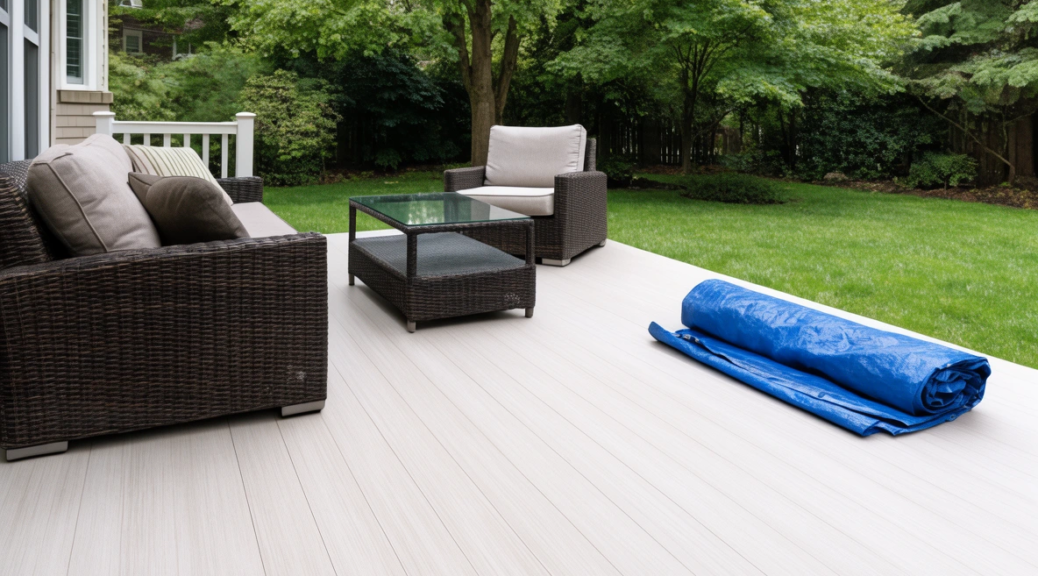
If you’re building a new deck or resurfacing an existing one, the material you choose determines how much maintenance you’ll deal with, how long the surface lasts, and how well it handles the weather your property actually sees. For homeowners across British Columbia, vinyl decking has become one of the most popular waterproof deck covering options – and the reasons go well beyond appearance.
Wood decks have been the default for decades, but they come with a long list of upkeep demands: staining, sealing, sanding, and replacing warped or rotting boards. Composite decking addresses some of those issues but still has limitations in wet climates. Waterproof vinyl decking offers a different approach entirely – a fully sealed deck membrane that protects both the surface you walk on and the structure underneath.
This article breaks down the key vinyl decking benefits, how it compares to other deck flooring materials, and why it’s especially well-suited for properties in the Lower Mainland and across BC.
Key Takeaways
- Vinyl decking provides a fully waterproof surface that protects the deck structure beneath from moisture damage and rot.
- It requires minimal maintenance – no staining, sealing, or sanding – saving time and money over the life of the deck.
- Vinyl is one of the most durable decking options for BC’s wet climate, resisting mould, mildew, and UV fading.
- It’s available in a wide range of colours and patterns, including options that replicate the look of natural wood or stone.
- Professional installation ensures proper drainage and a watertight finish that maximizes the material’s lifespan.
Waterproof Protection for Your Deck Structure
The single biggest advantage of vinyl decking is that it creates a completely waterproof barrier over your deck surface. Unlike wood or composite boards that have seams where water can seep through, a vinyl deck membrane is installed as a continuous layer with heat-welded seams that prevent any moisture from reaching the substructure below.
This matters more than most homeowners realize. In BC’s climate, a deck substructure that’s exposed to consistent moisture will eventually develop rot, mould, and structural weakening. The BC Building Code emphasizes moisture management as a critical factor in building envelope performance – and your deck is part of that envelope.
With vinyl decking, rainwater runs off the surface and is directed away through integrated drainage channels. That means the joists, beams, and posts underneath stay dry, extending the structural life of your vinyl deck by years.
Low-Maintenance Decking That Saves You Time and Money
One of the most appealing vinyl decking benefits is how little upkeep it requires compared to traditional materials.
Wood decks need to be stained or sealed every one to two years, sanded periodically, and inspected for rot, splinters, and warping. Skip a season and the damage compounds quickly – especially in a climate that delivers over 1,500 mm of annual rainfall.
Vinyl decking eliminates that maintenance cycle entirely. The surface resists staining, doesn’t absorb moisture, and won’t splinter or warp. Cleaning is as simple as sweeping off debris and occasionally washing with mild soap and water. There’s no need for chemical treatments, power washing, or refinishing.
Over a 15- to 20-year lifespan, the maintenance savings alone can offset a significant portion of the initial installation cost. For homeowners who’d rather spend their weekends on the deck than working on it, that’s a meaningful quality-of-life upgrade.
Built to Handle BC’s Weather
British Columbia’s Lower Mainland throws a lot at outdoor surfaces: heavy rain for months at a time, intense summer UV exposure, freeze-thaw cycles in shoulder seasons, and persistent humidity that encourages mould growth. Vinyl decking is engineered to handle all of it.
High-quality vinyl membranes are UV-stabilized to resist fading and chalking from sun exposure. They remain flexible in cold temperatures rather than cracking the way some rigid materials can. And because the surface is non-porous, mould and mildew can’t take hold the way they do on wood grain or in composite board grooves.
According to Environment and Climate Change Canada, the Lower Mainland experiences some of the highest precipitation levels in the country. A decking material that’s purpose-built for waterproofing isn’t a luxury in this region – it’s a practical necessity.
A Range of Styles and Finishes
One common misconception about vinyl decking is that it looks industrial or plain. Modern vinyl membranes are available in a wide variety of colours, textures, and patterns – including options that closely mimic the appearance of natural wood grain, stone, or tile.
Whether your home has a contemporary aesthetic or a more traditional look, there’s a vinyl finish that complements it. You can coordinate your deck surface with your home’s exterior, your railing and fence selections, or the colour palette of adjacent outdoor features like a patio cover.
The design flexibility extends to application areas as well. Vinyl decking works on flat decks, sloped surfaces, stairs, balconies, and rooftop patios. It can wrap around corners, cover irregular shapes, and be installed over both plywood and concrete substrates.
How Vinyl Compares to Wood and Composite
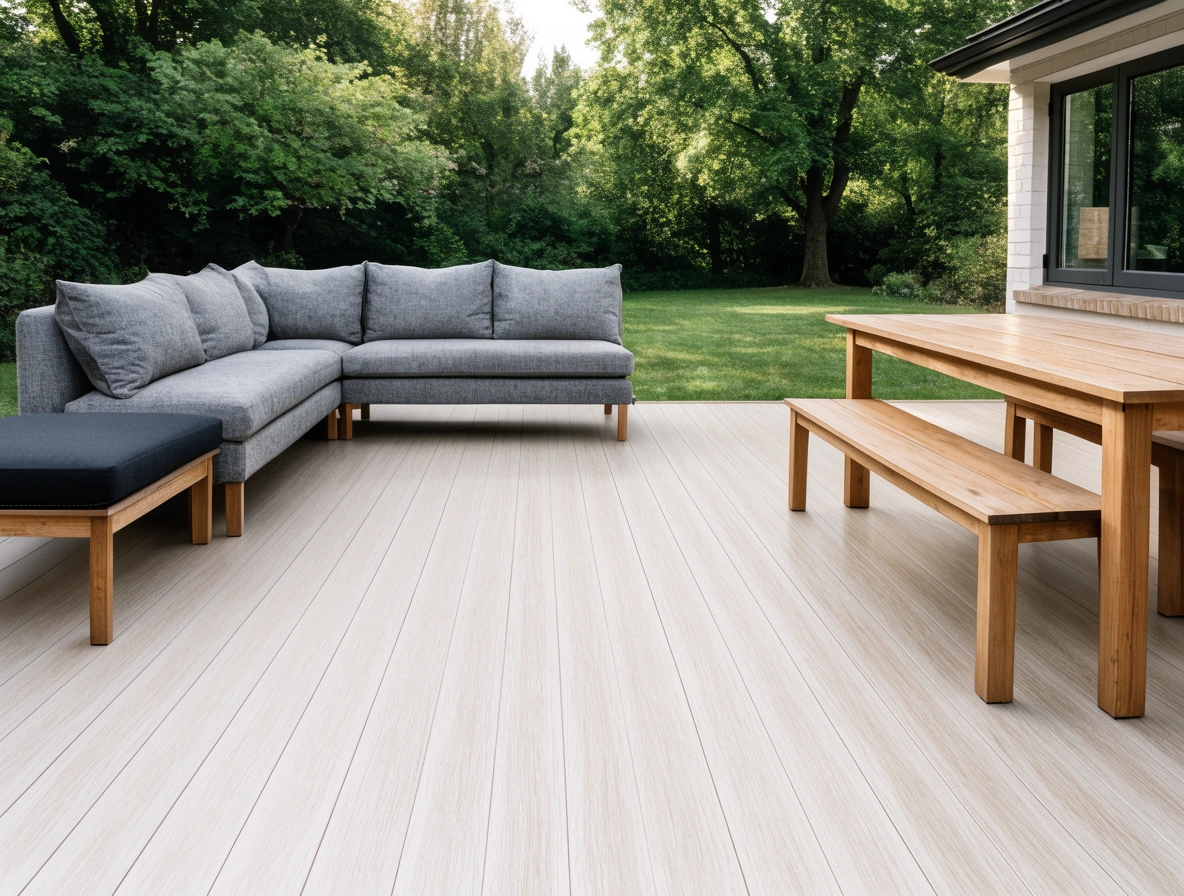
Understanding how vinyl stacks up against the alternatives helps clarify why so many BC homeowners are making the switch.
Vinyl vs. wood: Wood is less expensive upfront but costs significantly more over time due to maintenance, repairs, and shorter lifespan. Wood is also vulnerable to rot, insects, and warping in wet climates. Vinyl eliminates all of those issues.
Vinyl vs. composite: Composite decking (a blend of wood fibres and plastic) is more durable than wood but not fully waterproof. Water can still penetrate between boards and reach the substructure. Composite also tends to retain heat in direct sunlight, making it uncomfortable underfoot on warm days. Vinyl stays cooler and provides true waterproof protection.
Vinyl vs. PVC boards: PVC decking boards are waterproof at the surface but still have gaps between boards where water passes through. Vinyl membranes, by contrast, create a seamless, watertight layer with no gaps at all.
For properties that include a sunroom or enclosed patio area, vinyl decking on the adjacent outdoor surface creates a clean, consistent transition between indoor and outdoor spaces.
Professional Installation Makes the Difference
Vinyl decking delivers its best performance when it’s installed by experienced professionals. The membrane needs to be cut precisely, heat-welded at every seam, and integrated with proper drainage – including sloping, drip edges, and flashing where the deck meets the house.
Improper installation can trap moisture beneath the membrane, defeating the material’s primary purpose. It can also void the manufacturer’s warranty, leaving you without coverage if issues arise.
A professional installer will assess your deck’s condition, repair or replace any compromised substructure components, and ensure the vinyl is applied to a surface that’s smooth, dry, and structurally sound. If you’re considering vinyl for a new build or a resurfacing project, get in touch for a consultation to discuss your property’s specific needs and get a transparent quote.
Make Your Vinyl Deck Work Harder
Vinyl decking offers a rare combination of durability, low maintenance, and weather resistance that’s hard to match with any other surface material – especially in a climate as demanding as BC’s. It protects the structure underneath, keeps its appearance for years without intervention, and gives you a deck surface you can actually enjoy rather than constantly maintain.
Whether you’re resurfacing an aging wood deck or specifying materials for a brand-new build, vinyl is worth serious consideration. The upfront investment pays for itself in reduced maintenance, longer structural life, and a surface that’s built to handle everything the Pacific Northwest throws at it.
Frequently Asked Questions
How long does vinyl decking last?
High-quality vinyl decking typically lasts 15 to 20 years or more with proper installation and basic maintenance. Many manufacturers offer warranties in that range, and the material’s resistance to moisture, UV, and mould helps it maintain its appearance and performance throughout its lifespan.
Is vinyl decking slippery when wet?
No. Most vinyl decking products are manufactured with textured surfaces specifically designed to provide traction when wet. This makes vinyl a safe choice for areas that see frequent rain or are adjacent to pools and hot tubs.
Can vinyl decking be installed over an existing deck?
In many cases, yes. Vinyl membranes can be applied over existing plywood substrates as long as the surface is structurally sound, smooth, and free of rot or significant damage. A professional installer will assess the condition of your existing deck and recommend any necessary repairs before application.
Does vinyl decking get hot in the sun?
Vinyl decking tends to stay cooler underfoot than composite or dark-coloured materials because it doesn’t absorb and retain heat the same way. Lighter colour options further reduce surface temperature on hot days.
How much does vinyl decking cost compared to wood?
Vinyl decking has a higher upfront cost than pressure-treated wood but a lower total cost of ownership over time. When you factor in the ongoing expenses of staining, sealing, repairing, and eventually replacing a wood deck, vinyl typically comes out ahead within five to eight years.