
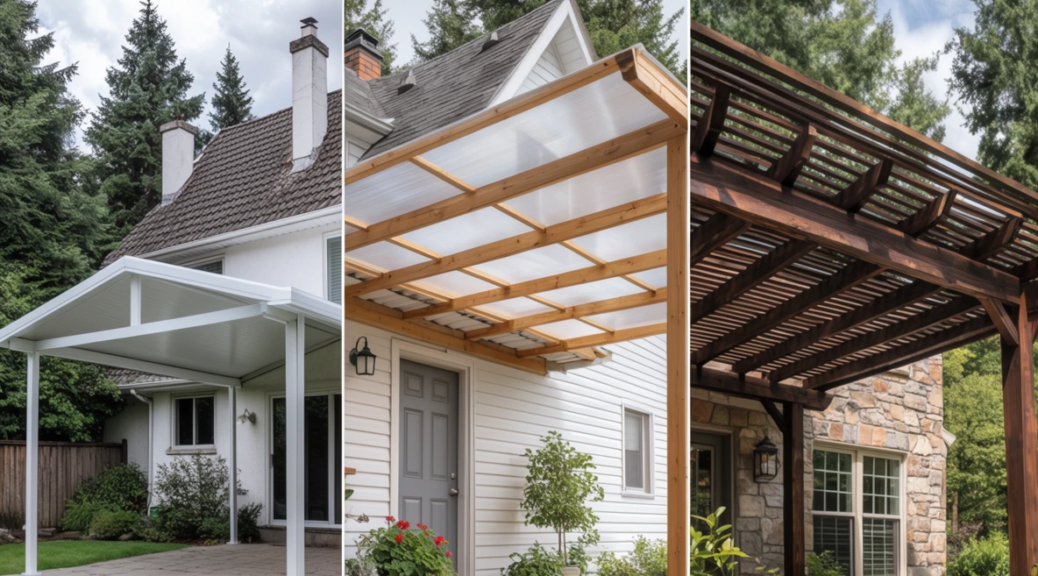
Choosing the right patio cover starts with understanding what’s available. With so many styles, materials, and configurations on the market, it’s easy to feel overwhelmed – especially when you’re trying to balance weather protection, aesthetics, and budget. If you’re exploring patio cover options for your home, knowing the different patio cover types and what each one does best will help you make a confident decision.
Every cover type has trade-offs. Some prioritize full rain protection, others focus on filtered light or design flexibility. The best choice depends on your climate, how you use your outdoor space, and what level of coverage you actually need.
This guide breaks down the most common types of patio covers available to Canadian homeowners, with a focus on what works in BC’s demanding Pacific Northwest climate.
Key Takeaways
- The main types of patio covers include solid aluminum, polycarbonate, glass, pergolas, retractable awnings, and shade sails – each with distinct strengths.
- Solid aluminum covers offer the best all-weather protection for regions with heavy rainfall like BC’s Lower Mainland.
- Pergolas and shade sails provide partial coverage and work well in drier climates or as design accents.
- Glass and polycarbonate covers balance weather protection with natural light transmission.
- Your climate, intended use, and property layout should drive the decision – not aesthetics alone.
Solid Aluminum Patio Covers
Solid aluminum covers are the most popular choice in BC and across Canada’s wetter regions. They provide complete protection from rain, snow, and UV exposure, making them the go-to option for homeowners who want to use their outdoor space year-round regardless of weather.
Aluminum is lightweight, corrosion-resistant, and virtually maintenance-free. It won’t rot, warp, or attract insects the way wood can. Most aluminum covers are powder-coated in a range of colours, so they integrate cleanly with your home’s exterior without needing periodic repainting.
These covers are typically attached to the house on one side and supported by posts on the other, creating a sturdy, permanent patio roof structure. They can span large areas and support additional features like ceiling fans, lighting, or heaters. For homeowners in the Lower Mainland dealing with over 1,500 mm of annual rainfall, according to Environment and Climate Change Canada, solid aluminum is often the most practical choice.
Polycarbonate Patio Covers
Polycarbonate covers use lightweight, impact-resistant panels that let natural light filter through while blocking rain and UV rays. They’re an excellent middle ground between the full shade of a solid cover and the openness of a pergola.
The panels come in clear, tinted, and opaque options, giving you control over how much light reaches the space below. Tinted polycarbonate reduces glare and heat buildup on sunny days, while clear panels maximize brightness.
Polycarbonate is typically mounted on an aluminum frame, combining the structural strength of metal with the light-transmitting properties of the panel material. This makes it a strong option for covered patios where you want rain protection without creating a dark, enclosed feeling. It’s also lighter than glass, which can simplify the structural requirements of the installation.
Glass Patio Covers
Glass covers deliver a premium, modern look with maximum light transmission. They create an open, airy feel while still providing full protection from rain and wind. Tempered or laminated safety glass is standard, ensuring the panels meet building code requirements for overhead applications.
The aesthetic appeal of a glass patio cover is hard to beat – it’s the closest thing to being outdoors while staying completely sheltered. Glass panels also pair well with contemporary home designs and can be combined with aluminum or steel framing for a sleek, minimalist appearance.
The trade-offs are higher cost, more frequent cleaning to keep panels clear, and greater weight that may require heavier structural support. For homeowners who prioritize design and are willing to invest in upkeep, glass is a compelling option. Pairing a glass cover with vinyl decking underneath creates a polished, cohesive outdoor living area.
Pergolas
Pergolas are open-framework structures with spaced rafters or slats across the top. They don’t provide full weather protection – rain and direct sun pass through the gaps – but they define the outdoor space, add architectural interest, and offer partial shade.
Wood is the traditional pergola material, though aluminum and vinyl pergolas have gained popularity due to their lower maintenance requirements. Some homeowners add retractable fabric canopies or climbing plants to increase shade coverage without losing the open feel.
Pergolas work best in drier climates or as design features in spaces where full rain protection isn’t the primary concern. In BC’s wet climate, a standalone pergola won’t keep you dry during a rain shower, but it can complement a solid cover in an adjacent area – creating zones of full and partial coverage across a larger patio or deck.
Retractable Awnings
Retractable awnings offer flexibility that fixed covers can’t match. They extend to provide shade and light rain protection when you need it and retract when you want full sun exposure. Most use a motorized mechanism that deploys a fabric canopy from a housing mounted to the house wall.
The main advantage is versatility. On a sunny morning, you can retract the awning and enjoy the warmth. When afternoon sun becomes too intense or light rain rolls in, you extend it for coverage. They’re also a good fit for properties where a permanent structure might not be visually appropriate or where building restrictions apply.
The limitations are durability and coverage level. Fabric awnings aren’t designed for heavy rain, snow loads, or strong winds. They require periodic cleaning and eventual fabric replacement. For BC homeowners who need reliable rain protection, a retractable awning works better as a supplement to a solid cover than as a standalone solution.
Shade Sails
Shade sails are fabric panels stretched between anchor points to create angled canopies over a patio or deck. They offer a modern, sculptural look and effective sun protection, and they’re among the most affordable patio cover options.
High-quality shade sails use UV-resistant, breathable fabric that blocks a significant percentage of solar radiation while allowing some airflow. They can be arranged in overlapping configurations to cover larger areas or create interesting geometric patterns.
Like pergolas, shade sails are not waterproof – they’re designed for sun protection rather than rain coverage. They also need to be removed or secured during storms, as strong winds can damage the fabric or anchor points. In the Lower Mainland, they’re best suited as a seasonal addition to a space that already has a primary cover for rain protection.
How to Choose the Right Type for Your Property
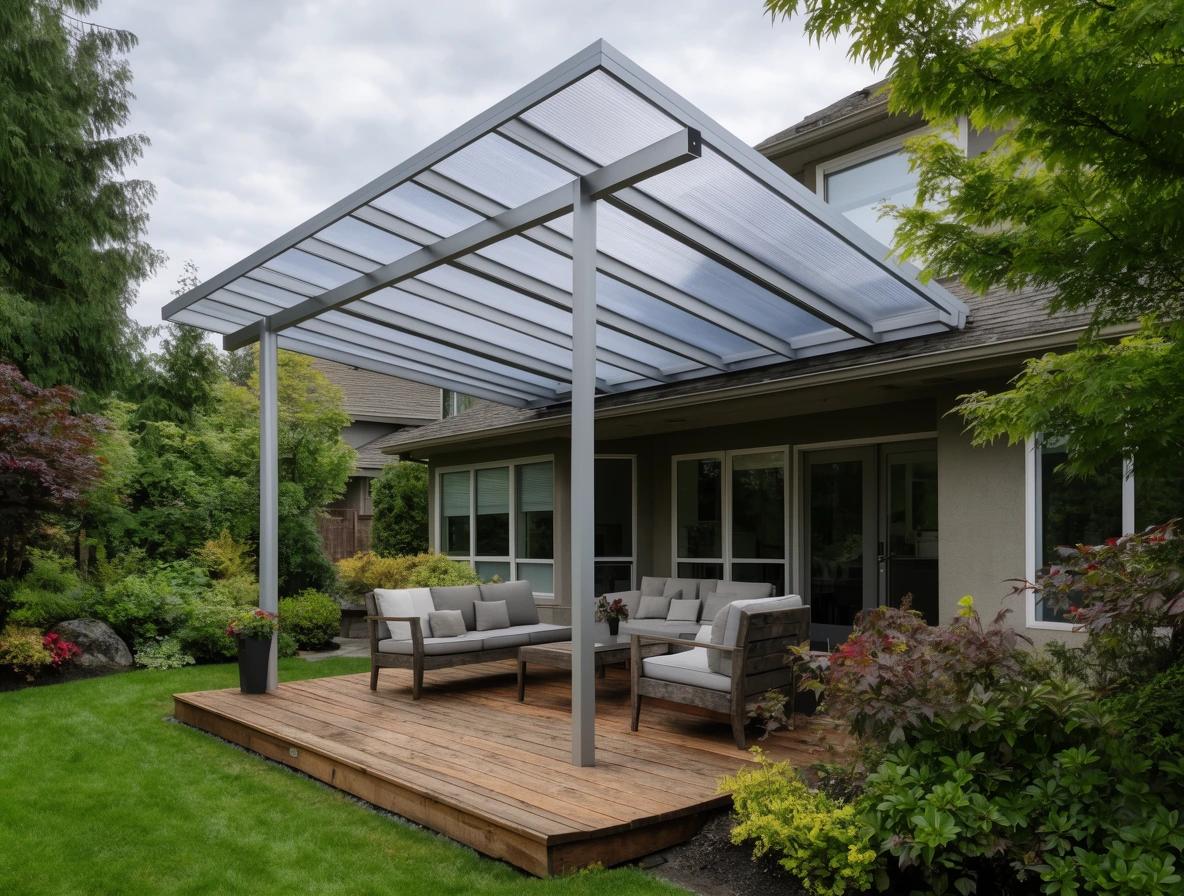
Selecting the right patio cover comes down to three factors: your climate, how you use the space, and the design of your home.
If rain protection is the priority – and in most of BC, it should be – solid aluminum, polycarbonate, or glass covers are your best options. If you want filtered light, polycarbonate is the sweet spot. If aesthetics and maximum brightness matter most, glass is the way to go.
For homeowners who want flexibility, combining cover types works well. A solid aluminum cover over the main seating area with a pergola extending beyond it creates a layered look with varying levels of coverage. Adding railings around the perimeter provides safety and wind protection, while a sunroom adjacent to the covered patio offers a fully enclosed option for colder months.
Whatever type you’re considering, a site assessment from an experienced installer is the best first step. Request a consultation to discuss your property’s layout, your goals, and which cover type delivers the best value for your situation.
Frequently Asked Questions
What type of patio cover is best for rainy climates?
Solid aluminum covers provide the most reliable rain protection. They shed water completely, handle heavy rainfall without issue, and require no maintenance beyond occasional cleaning. Polycarbonate and glass covers are also effective for rain protection while allowing more natural light through.
Are pergolas good patio covers?
Pergolas are excellent for adding architectural interest and partial shade, but they don’t provide full weather protection. In rainy climates like BC’s, a pergola works best as a design accent alongside a solid cover rather than as the primary overhead structure.
How long do patio covers last?
Aluminum patio covers typically last 20 years or more with minimal maintenance. Polycarbonate panels generally last 10 to 15 years before needing replacement. Glass covers can last decades with proper care. Wood pergolas require more upkeep and may need replacement sooner if not regularly maintained.
Can I add a patio cover to an existing deck?
Yes. Most patio cover types can be retrofitted to existing decks and patios. The key is ensuring the existing structure can support the added weight and that the cover is properly attached to your home’s exterior wall. A professional assessment will confirm whether any reinforcement is needed.
Do I need a permit to install a patio cover in BC?
In most BC municipalities, yes – particularly for attached structures that exceed certain size thresholds. Permit requirements vary by city and township, so check with your local building department or work with an installer who handles the permit process. The BC Building Code sets the provincial standards that local bylaws build on.